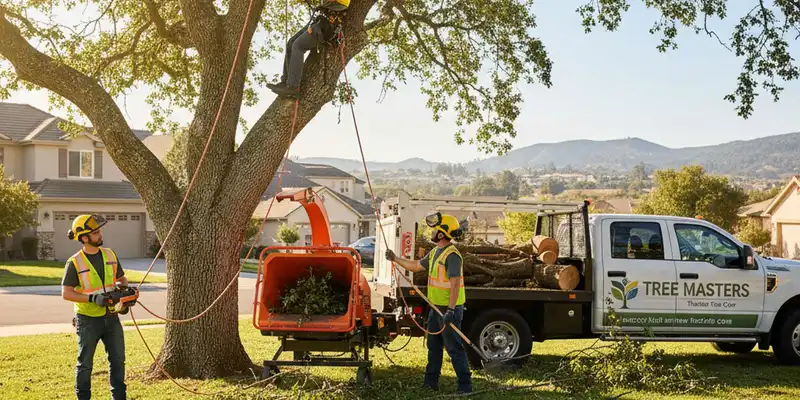
Collingswood is a close-knit residential community known for early twentieth-century rowhouses, semi-detached homes, and modest single-family properties framed by mature trees that have often gone unmanaged for years. Small lots, shared fence lines, and limited driveway access can make even routine tree work complicated, especially when urgent hazards appear. Tree care professionals in Philadelphia know how to evaluate tree risk on tight properties, work safely near utility lines, and address disease-affected trees that may threaten nearby structures in a community where every yard connects to the next.
That is why so many property owners in Collingswood, PA, turn to Arbor Tree Care to help keep their landscapes in good shape throughout the year.

Prefer to Talk to An Expert?
(267) 463-4433
Why Collingswood Property Owners Rely on Local Expertise
Professionals who work in this area understand the aging canopy, tight boundary lines, and storm exposure that shape tree care in the neighborhood. Each job is approached with equipment and methods suited to Collingswood properties, including conditions like root pressure, fungal stress, and storm debris common in this part of the region.
From expert stump removal solutions along Haddon Avenue to structural pruning near the historic storefronts on Collings Avenue, each project is completed with careful attention to detail and long-term property care.
If you care about your property, local contractors can help keep your trees healthy, your yard open, and your space safe in Collingswood.
Our Tree-Service Services
in Philadelphia, PA, Include
Tree Services Shaped for Your Collingswood Neighborhood
The dense residential layout and narrow access points in this area call for tree care that fits the property, not a generic template. Local professionals adapt their approach to the realities of older urban lots.
Whether it is a semi-detached rowhouse in the Lees Avenue corridor, a single-family home in Collings Manor, or a corner lot near Newton Lake Park, the service plan is built around the site itself.
From tree trimming and tree pruning to stump removal and emergency tree services, every service is tailored to the neighborhood’s character and the needs of each individual property.
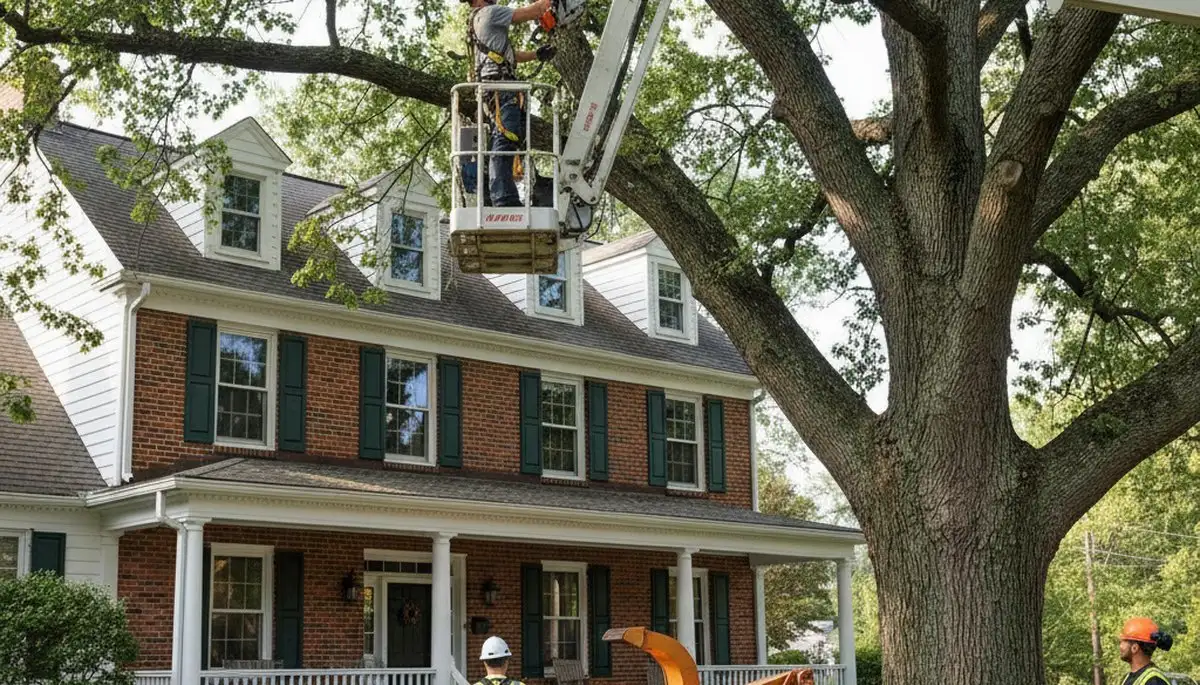
Collingswood's Mature Urban Canopy, Built Over Time
Collingswood expanded quickly in the early 1900s as a streetcar suburb of Philadelphia, filling with compact homes and street trees meant to shade narrow sidewalks and walkable corridors. That history still shows up today in overextended root systems, weak limb unions, and trunks under disease pressure, all of which affect how tree work must be performed now.
Aging Tree Structure and Limb Failure Risk
Many Collingswood properties, especially along the Lees Avenue and Collings Avenue corridors, include oak, maple, and elm trees that have passed their best structural years without regular maintenance. The result can be co-dominant stems, deadwood, and dropping limbs that create real safety concerns along property lines and walkways.
Local professionals address poor canopy structure with targeted crown reduction, selective limb removal, and professional tree pruning services, helping reduce access problems and limit risk for nearby property owners.
Root Encroachment on Hardscape and Foundations
Mature street trees add welcome shade, but they can also pressure sidewalks, driveways, and foundations. Root systems from silver maples and Norway maples are often responsible for lifted concrete and cracks along older residential blocks.
Professionals handle these situations with targeted root zone assessment, reliable root protection services, and removal planning that respects utility corridors and shared drainage patterns beneath Collingswood streets.
Fungal Disease Pressure from High Humidity
Dense canopy cover and limited airflow can make it harder for trees in Collingswood to resist fungal disease, especially anthracnose and verticillium wilt during humid summers.
Trusted pros respond with early-season thinning, quality tree disease treatments, and soil health monitoring to support tree vigor and reduce the spread of infection between neighboring yards.
Storm Damage from Northeast Weather Patterns
Late-winter snow, spring gusts, and fall wind events can all lead to broken limbs or uprooted trees in Collingswood's tightly packed residential blocks.
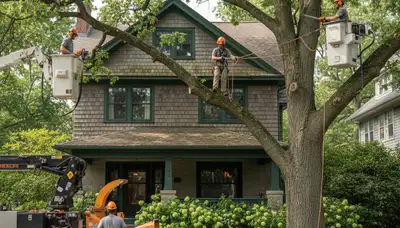
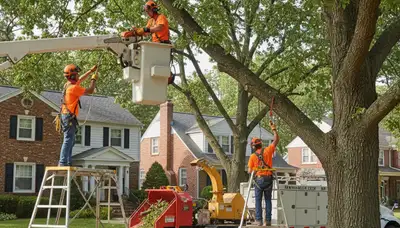
Experienced crews use fast storm-response procedures with aerial lifts, climbing techniques, and organized debris cleanup so properties stay accessible even when several trees are damaged at once. Residents near tree removal contractors in Lansdowne, PA face similar weather-related challenges and benefit from the same regional approach.
Confined Access and Equipment Limitations
Narrow side yards, shared fences, and limited driveway clearance are common here, which makes equipment staging and debris removal harder than on standard suburban lots.
Local pros rely on compact lifts and hand-rigging systems, along with neighbor coordination and property protection, to complete tree services that fit even the tightest lots with no rear access. Similar access constraints are familiar to crews handling tree trimming services in Oaklyn, NJ, where rowhouse-era properties present the same kinds of limits.

Kick off your tree service project today
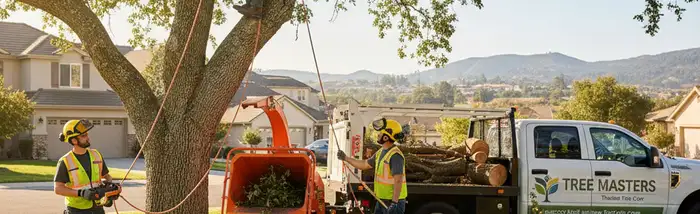
Tree Services in Collingswood, PA: Seasonal Care for Every Property
From scheduled maintenance to urgent storm response, local professionals help keep properties safe, healthy, and well cared for throughout the year:
Routine Tree Trimming and Pruning in Collingswood, PA
- Seasonal Crown Thinning on Haddon Avenue Corridors: Opens the canopy to reduce wind load and improve sunlight for dense street trees that shade Collingswood's older sidewalk corridors in spring and summer.
- Structural Pruning for Young Replacement Trees: After removals near Newton Lake Park, newly planted trees benefit from early structural pruning that helps them develop strong branching before surrounding canopy fills in. Tree planting and follow-up pruning work together to support long-term stability.
- Deadwood Removal on Shared Property Lines: Dead branches hanging over fences along Collings Avenue and nearby side streets are removed before storm season to lower liability and protect neighboring structures.
- Clearance Pruning Around Utility Lines: Trees growing into overhead service lines in the Collings Manor section are carefully directed back to safe clearance without sacrificing overall tree health.
- Canopy Lifting for Pedestrian and Driveway Access: Lower limbs on mature street trees are raised to improve sightlines and restore headroom along walkways and narrow driveways common on Collingswood's early residential blocks.
Plan seasonal trimming before spring growth begins to reduce storm stress and keep the canopy in better shape through summer.
Tree Removal Services in Collingswood, PA
- Hazardous Tree Removal Near Structures: Trees leaning toward homes or garages on compact Collingswood lots are removed in controlled sections with rigging that helps protect rooflines and fences.
- Storm-Damaged Tree Removal: After high winds, split or partially uprooted trees are removed quickly so driveways and walkways can be used safely again.
- Dead Tree Removal from Fungal Decline: Trees weakened or killed by verticillium wilt or anthracnose are removed before they fail, especially in wetter areas near Newton Lake where decay can progress faster.
- Removal of Invasive Species: Self-seeded Norway maples and ailanthus trees in rear yards and fence lines are removed to protect native plantings and reduce root pressure on hardscape.
- Post-Removal Site Clearing: Once the tree is out, crews clear debris, grind surface roots when needed, and prepare the area for landscaping or replanting so the site is clean and ready for next steps.
Removing dead or storm-damaged trees quickly helps protect nearby structures and keeps Collingswood properties safer in every season.
Stump Grinding and Cleanup in Collingswood, PA
- Compact Stump Grinder Access on Narrow Lots: Low-clearance grinding equipment is used where standard machines cannot fit through side gates or reach rear yards without disturbing fencing or landscaping.
- Surface Root Grinding Along Walkways: Exposed roots that have lifted pavers or cracked driveway aprons are ground below grade to restore safer foot and vehicle access.
- Multi-Stump Clearance for Yard Renovation Projects: Properties being prepared for full canopy replacement or landscape design often need multiple stumps removed to free up planting space and lawn area.
- Stump Removal Near Foundation Walls: Stumps close to home foundations are ground carefully to reduce vibration and avoid unnecessary root disturbance on older Collingswood properties.
- Debris Hauling and Site Restoration: All chips and grindings are removed, disturbed soil is leveled, and the area is prepared for seeding or ground cover so the property looks finished and usable.
Prompt stump removal reduces trip hazards, limits fungal regrowth, and creates more usable yard space on Collingswood’s smaller residential lots.
Emergency Tree Services in Collingswood, PA
- 24-Hour Storm Response for Fallen Trees: When storms or ice bring trees down across driveways, walkways, or structures in Collingswood, crews respond quickly to clear access and check for related damage to fences, roofs, and utility connections.
- Emergency Limb Removal After Wind Events: Large limbs left hanging in the canopy or resting on structures after storms are removed with aerial equipment and hand-rigging to prevent further damage.
- Urgent Hazard Assessment for Leaning Trees: After heavy rain saturates the soil, trees that suddenly lean or show exposed root plates are assessed right away to determine whether removal is needed.
- Storm damage Response Coordination Across Adjacent Properties: In Collingswood’s dense neighborhoods, one fallen tree can affect more than one property. Emergency crews coordinate with nearby owners to clear debris efficiently and restore safe access across affected lots.
- Post-Storm Debris Removal and Site Stabilization: After emergency work is complete, wood debris, root balls, and branch material are removed, and disturbed soil is stabilized to reduce erosion and additional hazards.
Quick emergency response helps prevent more damage after storms, keeps residents safe, and can reduce repair costs when conditions change fast.